
click for details is among the few casino games that somehow seems both deceptively simple and truly tense. I’ve played it enough to see why it keeps showing up in Canadian gaming chats, notably among players who appreciate crash games and Mines-style titles. The concept is straightforward: a chicken attempts to cross a road, and you bet on how far it advances before disaster hits. Underneath that cartoon skin, nevertheless, sits a smart risk-management game built on gambling math that rewards careful decisions. In this guide, I’ll guide you through exactly how Chicken Road operates, how the RTP and volatility appear in actual play, how the wagering range and win potential grow, and which methods offer you the best shot at walking away satisfied.
How Chicken Road Functions: Main Gameplay Mechanic
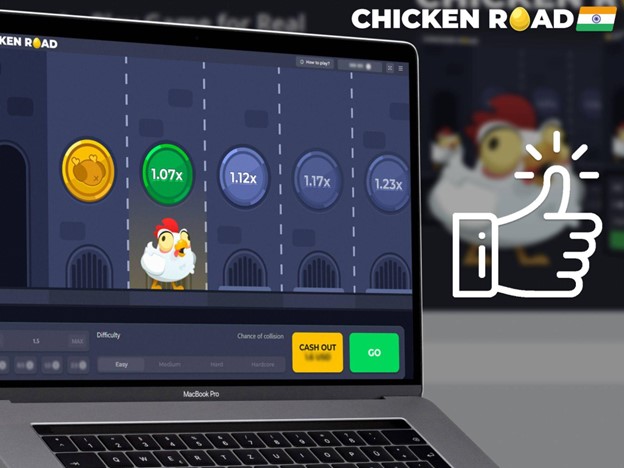
At its center, Chicken Road is a step-based risk game, not a spinning-reel slot. You begin each round by setting a bet, then see the chicken commence crossing a multi-lane road. Every lane crossed bumps up your possible payout, but you can constantly cash out prior to the next step. If a vehicle collides with the chicken, the round finishes and you lose your stake. The main question per round is when to stop. Do you take a modest profit after three lanes, or do you go after a bigger multiplier and tolerate the growing chance of losing it all? That stress is that which makes the game so replayable.
The game presents this loop with true clarity. A multiplier ladder sits on screen, indicating exactly the amount your bet yields at each step. The first lane may offer 1.2x, the second 1.5x, the third 2.0x, and the numbers increase sharply as you approach the far side. You can cash out yourself at any time, or choose an auto-cashout target beforehand. I appreciate that the game forces an active choice as opposed to leaning entirely on luck. Unlike a slot in which the reels spin and you stand by, Chicken Road puts the exit timing fully in your hands, which alters how the volatility impacts you while keeping you locked in.
RTP and Variance: Understanding the Metrics
Grasping the RTP
Chicken Road generally functions with a return-to-player percentage within the scope you’d expect from a finely adjusted risk game, generally near 96% to 97%, depending on the version and any tweakable configurations. I can’t quote a single verified number because operators might set up the game a little differently, but the math model remains stable. The RTP represents the long-term expected return across all possible strategies, indicating your individual session results will vary wildly based on how aggressively you push the chicken. That’s the nature of a game where player choices directly drive outcomes, and it’s why two people with the same bankroll can have completely different rides.
Volatility Depends on Your Choices
Volatility in Chicken Road stands at medium to high, with a twist. In a traditional slot, volatility tells you how often and how much a game pays. Here, you partly pick your own volatility. Cash out after one or two lanes every round, and you’ll get regular minor payouts with low volatility. Chase the deeper multipliers consistently, and you’ll experience prolonged losing runs broken by occasional big payouts, which is high-volatility behavior. The game may fit different appetites for risk, but you need to be candid about your own tendencies. The house edge stays the same regardless of strategy, yet the shape of wins and losses alters considerably based on your cashout discipline.
Comparing Chicken Road to Other Risk-Based Games
Chicken Road sits in the same family as crash games like Aviator or Spaceman and shares DNA with Mines and Plinko-style titles. The common thread is that the player directs the exit, and the multiplier rises as the risk goes up. What puts Chicken Road apart is its step-based structure. In a crash game, the multiplier rises continuously and the crash point remains hidden. In Chicken Road, the progression is discrete: you see each lane as a distinct decision point. That turns the game feel more deliberate and less frantic, which I think connects to players who need a second to think between steps and favor a clearer risk map.
Compared to Mines, where you choose which tiles to reveal, Chicken Road drops the spatial puzzle element and substitutes it with a straight line. You aren’t deciding where to click; you’re determining how far to go. That simplicity is a strength. It renders the game easy to pick up while still providing real decisions. The maximum multipliers in Chicken Road are generally lower than what you’d see in the wildest crash games, but the trade-off is a more predictable rhythm. For Canadian players who’ve tested other risk games and deemed them too chaotic, Chicken Road provides a middle ground that’s easier to read and manage without killing the excitement.
Unique Mechanics and Game Mechanics
Chicken Road is not a feature-packed game as a modern video slot is. You won’t find free spins, scatter symbols, or wild substitutions here. The bonus mechanics are built into the core risk loop itself. The main special feature is the auto-cashout function, which allows you to set a target multiplier before the round starts. When the chicken hits that number, the game cashes out your winnings automatically. This tool is really convenient because it strips away the temptation to keep pressing when you should stop. I use it constantly, especially when I know I’m prone to reaching for “one more lane,” and it’s saved my bankroll more times than I can count.
Some versions of Chicken Road also toss in a progressive multiplier element or a random bonus lane that emerges now and then. Those aren’t guaranteed across every platform, so check the specific game rules where you play. What remains unchanged is the risk-reward structure. The deeper you go, the higher the payout, but the crash probability increases with each step. There’s no hidden trick that changes the underlying odds. The only feature you truly control is when you exit, and mastering that decision distinguishes disciplined players from those who give back their wins. Treat the cashout button as your most powerful tool, and never underestimate the value of locking in a profit.
Theme and Atmosphere
Chicken Road commits to a whimsical farmyard style, but don’t confuse the bright theme as an absence of tension. The design employs a simple, nearly bare road extending across the screen, the https://www.reddit.com/r/Lottery/comments/1b7sy20/do_any_state_lotteries_still_have_draw_games_with/ chicken at the side and a set of lanes or steps marked ahead. Warm browns, grass greens, and the rare bright red hazard dominate the palette. The charm, for me, arises from the restraint: no cluttered backgrounds, no overwhelming animations, simply the chicken, the road, and the obstacles that emerge as you advance. The sound matches the same approach—soft clucks and a faint heartbeat-like pulse that grows the deeper you go, so each step feels heavier.
What creates the atmosphere click is how the visuals communicate risk without requiring a tutorial. Every lane the chicken crosses stands for a bigger reward, but the visual density of oncoming traffic climbs, too. Cars, trucks, and other dangers crowd in the farther you push. That forms a natural ramp that reflects the game’s math. For Canadian players who know crash titles or Mines, the visual language will seem familiar right away. Chicken Road doesn’t aim to be a cinematic slot; it positions itself as a quick, repeatable decision game with a memorable mascot, and that focus works.
Strategy Considerations for Canadians
Conservative vs. Aggressive Approaches
Chicken Road favors a strategic head more than most casino games, but you have to understand that no approach changes the house edge. The game is structured so the mathematical expectation of every round is negative for the player over the long haul. What strategy does affect is the structure of your session. A conservative approach, cashing out at 1.5x to 2.0x, provides regular small wins and a reasonably steady bankroll. An aggressive approach, targeting 10x or higher, will produce largely losses with the sporadic large payout. Neither approach is clearly better; the best option relies on your goals and how well you tolerate losing streaks, and I’ve witnessed both work when applied with consistency.
Bankroll Management Tips
For Canadians, I suggest treating Chicken Road as a bankroll management practice. Determine a session budget before beginning and chop it into a set number of rounds. If you possess $100 and want 50 rounds, your bet ought to be $2 per round. Then pick a cashout strategy that suits your temperament. If you desire a lengthier session with more victorious rounds, cash out early and often. If you seek a chance at a big multiplier, acknowledge that the majority of rounds will result in losses. The worst move is to start cautiously, get bored, and then abruptly pursue deep multipliers with the remainder of your bankroll. That behavior almost invariably ends badly, and it is the quickest way to ruin a solid start.
Common Mistakes and How to Avoid Them
The “One More Lane” Mistake
The biggest mistake I see in Chicken Road is what I describe as the “one more lane” trap. A player collects at 2.0x, starts another round immediately, and goes for 3.0x since the last win appeared easy. The next round ends early, and the player pursues the loss by betting bigger and venturing deeper. This spiral is predictable and avoidable. The fix: choose your cashout point prior to the round starting and stay with it, no matter what happened in earlier rounds. The game has no memory; each round is standalone. Your last win won’t make the next crash less possible, and understanding that is the initial step toward controlled play.
Misunderstanding RTP and Auto-Play
Another frequent error is treating Chicken Road like a slot where you just set a bet and leave the game running. Auto-cashout is available, but you still need to choose a threshold. Setting it at 10x and then browsing through dozens of rounds without paying attention is a fast way to drain your balance. The game demands your attention, even while you rely on automation. In conclusion, some players misunderstand the RTP and assume that because the game pays back 96% in the long run, they’re due for a win after a losing streak. That’s the gambler’s fallacy. Every round is a new event with the same core probabilities, and no stack of earlier losses shifts the odds of the next attempt.
Chicken Road works because it turns a simple idea into a true challenge of nerve and timing. After numerous sessions with it, I think the game’s real value is how it compels you to face your own risk tolerance in real time. For Canadian players wanting to optimize it, my particular advice is this: start with a fixed bankroll of at least 50 minimum bets, set auto-cashout at 2.0x for your initial hundred rounds, and record a basic log of crashes versus cashouts. That data will demonstrate to you exactly how the road operates and aid you in choosing whether you prefer to shift to a more aggressive style. Don’t chase losses, don’t forsake your plan mid-session, and never forget that the chicken couldn’t care less about your last win. Approach each crossing as a new decision, and you’ll leave with a far clearer understanding of why this odd little game has secured its place in so many Canadian players’ routines.
Betting Range, Multiplier Values, and Maximum Win Potential
Wager Sizes for All Budgets
The betting range in Chicken Road is made to accommodate prudent players and those chasing more serious stakes. You can normally start with a minimum wager small enough for long practice sessions, often a few cents to a dollar, depending on the platform. The maximum stake runs much higher, sometimes reaching several hundred dollars per round, which gives high rollers room. I always recommend starting at the base of the range while you discover how the multiplier chain behaves, because the game can deplete a bankroll fast if you chase deep multipliers without a plan. Even a few dozen rounds at the minimum will demonstrate to you more than any review ever could.
Multiplier Ladder Breakdown
The multiplier framework is where Chicken Road gets intriguing. Early lanes deliver modest returns, commonly between 1.1x and 2.0x, so withdrawing early gives minor but regular wins. The middle lanes climb into 3x, 5x, and 8x territory, while the deepest lanes can hit 20x, 50x, or higher, based on the version. The top win potential is a outcome of the maximum multiplier and your bet size. A $10 bet cashed out at 50x returns $500, while a $100 bet at the matching multiplier returns $5,000. The theoretical ceiling is high, but attaining it means outlasting a treacherous road, and most attempts finish in a crash long before you get there.
How to Master Chicken Road: Detailed Guide
Setting Up Your Round
Starting out with Chicken Road takes under a minute, but comprehending the flow before you risk real money is key. First, pick your bet amount using the on-screen controls. The game presents your total balance and the potential payout at each multiplier level. Secondly, decide if you’ll play manually or set an auto-cashout threshold. With manual play, you have to click the cashout button before the chicken gets hit. With auto-cashout, the game exits for you at your chosen multiplier. Third, initiate the round and watch the chicken begin its crossing. I recommend using auto-cashout for your first handful of sessions to develop some discipline.
During the Crossing
As the chicken moves, the multiplier ladder adjusts in real time. Each lane crossed pushes your potential payout higher, but the visual and audio cues also signal rising danger. You can cash out whenever before a crash. If you do, your bet gets scaled by the current multiplier and credited to your balance. If the chicken gets hit bleacherreport.com before you cash out, you lose your bet. The round begins anew, and you can go again. I suggest playing a bunch of rounds at the minimum bet before you boost your stakes. That offers you a feel for how often crashes happen at different depths and helps you adjust your cashout timing without risking meaningful cash.